Are you the lucky recipient of a new Ooni oven? (We’ll count it as a gift even if it was a “from me, for me” kind of gift!) First of all, congratulations and welcome to the community. To help you begin your pizza-making journey, here are ten things you should know when getting your oven up and running:
1. Invest in a good table
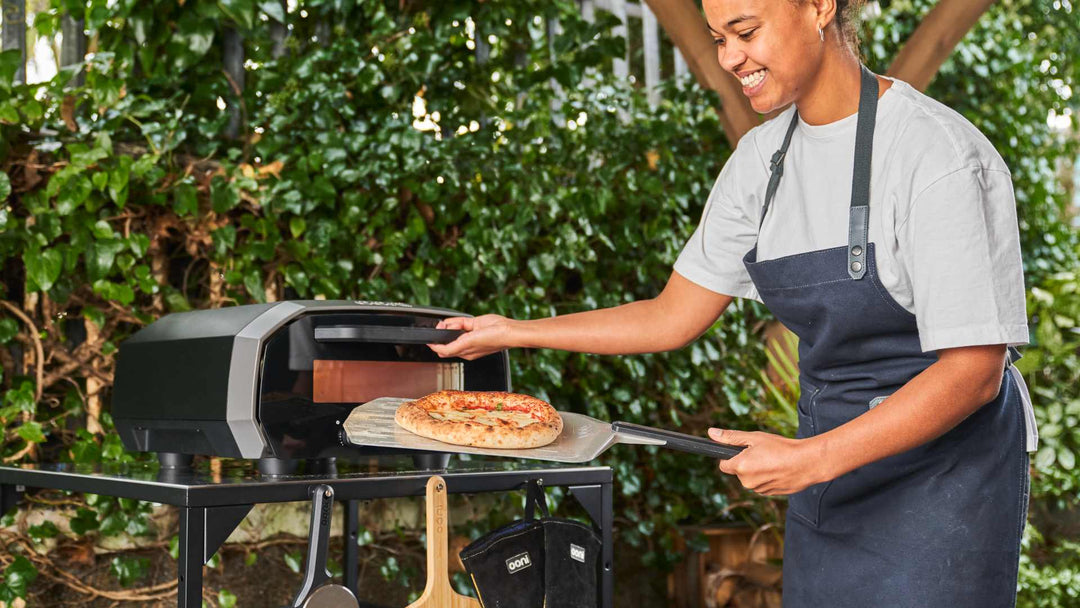
Unless you’d like to lie on your stomach and launch your pizzas Superman-style, you’ll want to set your oven on a sturdy metal, stone, or wood table. Aim for something between waist and chest height for maximum comfort. Don’t already have an outdoor kitchen? Our modular tables were created specifically for our ovens.
2. Cook outside…unless you have a Volt!
For safety reasons, our ovens are certified for outdoor use only unless you have a Volt, which is electric and works for both indoor and outdoor use. A good rule of thumb is to give yourself three feet (one metre) of clearance around the sides of your oven and nine feet (three metres) above it for safe pizza making.
3. Season your oven before you use
When we say “season,” we mean you should run it at top temperatures for 30 minutes, let it cool completely, and then wipe it down with a paper towel. Why? Because it helps to get rid of any oil and remnants left over from the manufacturing process. We recommend doing this the day before your first cook, and then you’ll be good to go!
4. Set yourself up for success
Think like a chef; before you cook, have your mise en place (all equipment and ingredients in their proper places, for you non-French speakers). Yes, you’ll have a table for your oven, but you’ll also want to decide where you’ll shape and top your dough, where to store your tools and how to serve your pizzas to family and friends.
At a minimum, you’ll need an infrared thermometer and a pizza peel for launching (you can use a chef’s knife to slice your pizzas, but a nice cutter wheel can be helpful, too). It's also handy to have a pizza topping station for ingredients, and a digital scale makes it much easier for prepping dough. Note: If you’re making dough from scratch, be sure to allow the time needed for your recipe. Some can be prepared the day of, and others need or require more than a day to allow flavour to develop. You should always make more than you need for any pizza mishaps (we’ve all been there!) or to send your friends home with leftovers.
5. Sort out your fuel
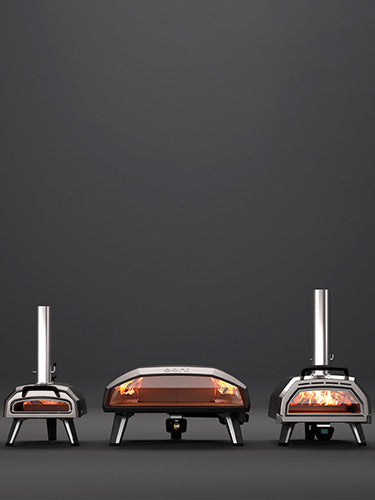
Depending on which oven you have and/or the kind of pizza you want to make, you’ll need to figure out what kind of fuel to use. The short answer is Fyra (pellets), Koda (gas), Karu (gas, wood, or coal) and Volt (electric), but you'll want to review our Getting Started guides or consult the Essentials Guide that came in your box for detailed instructions.
In the same way that fresh ingredients make for better food, quality fuel burns better and produces more delicious pizzas. And just like having more dough on hand than you need, be sure to have more fuel than you need as well!